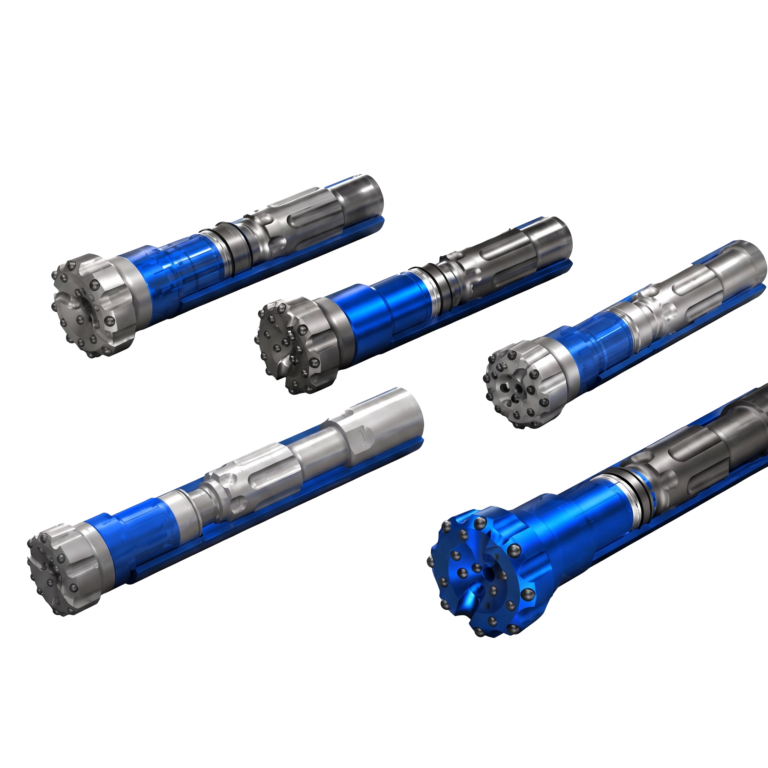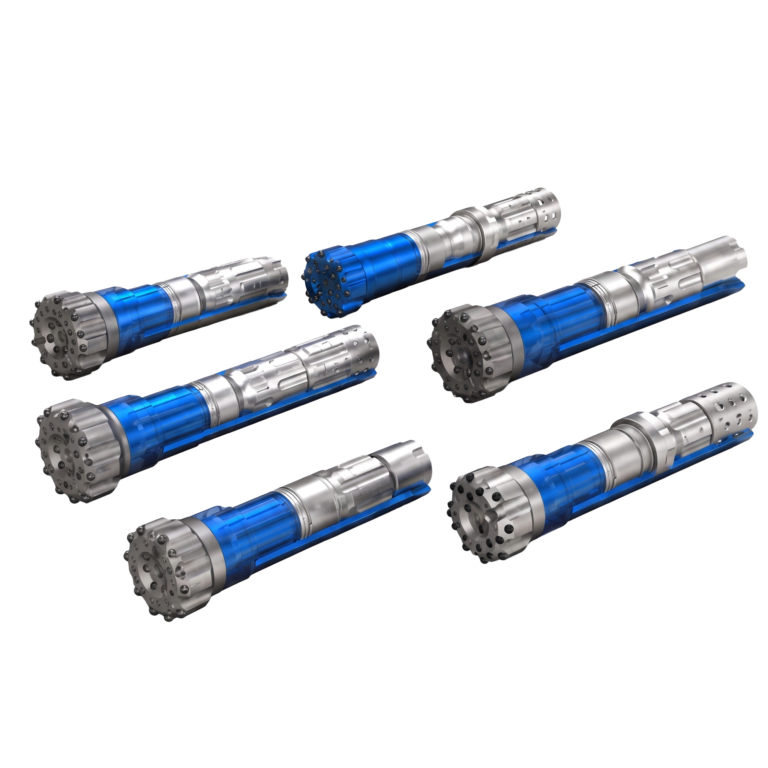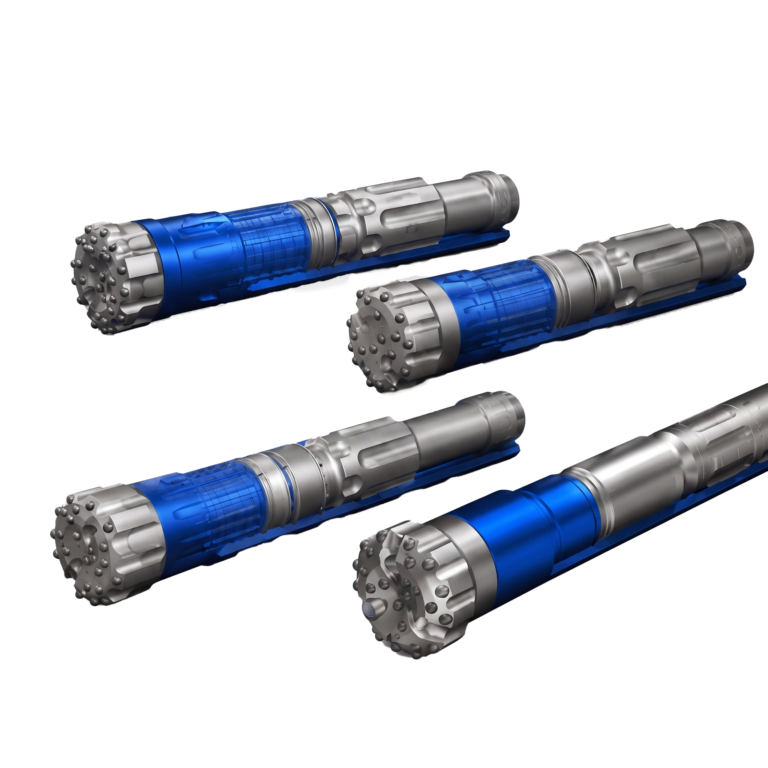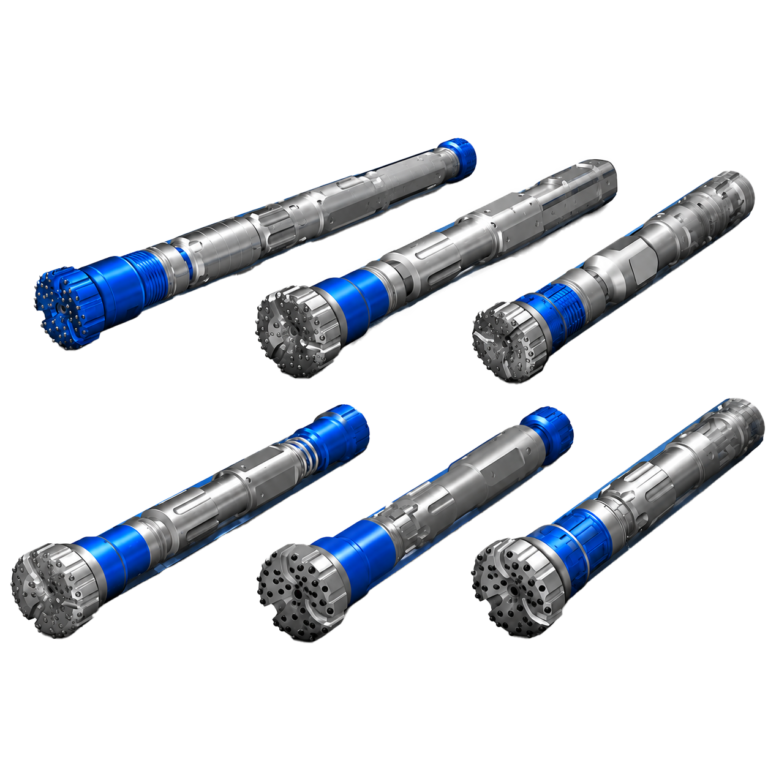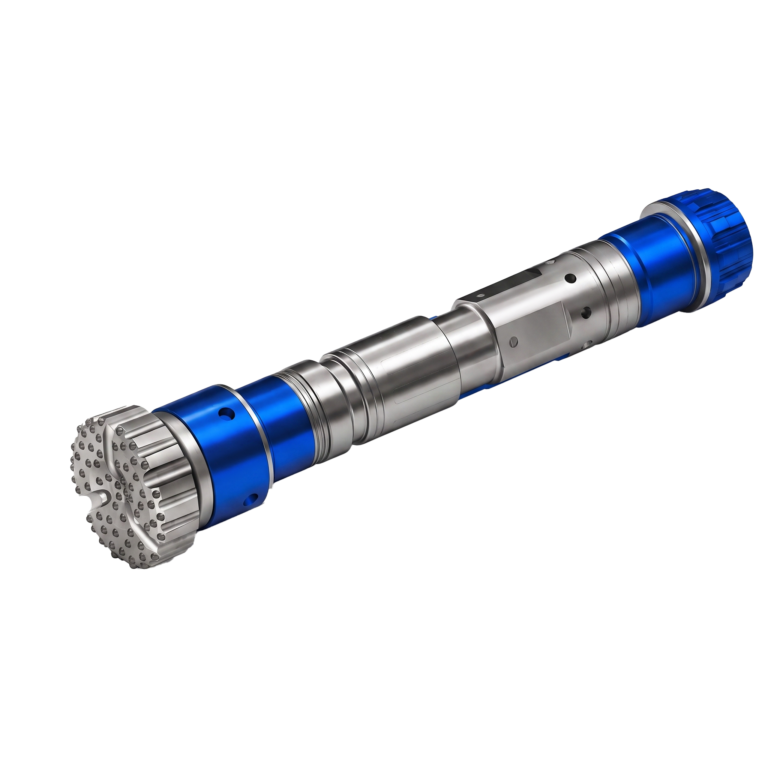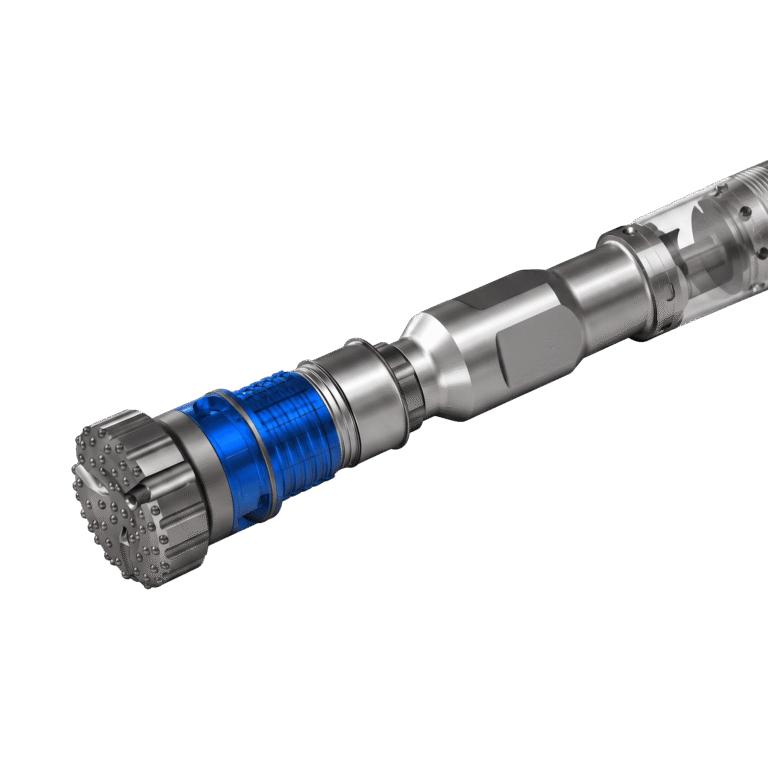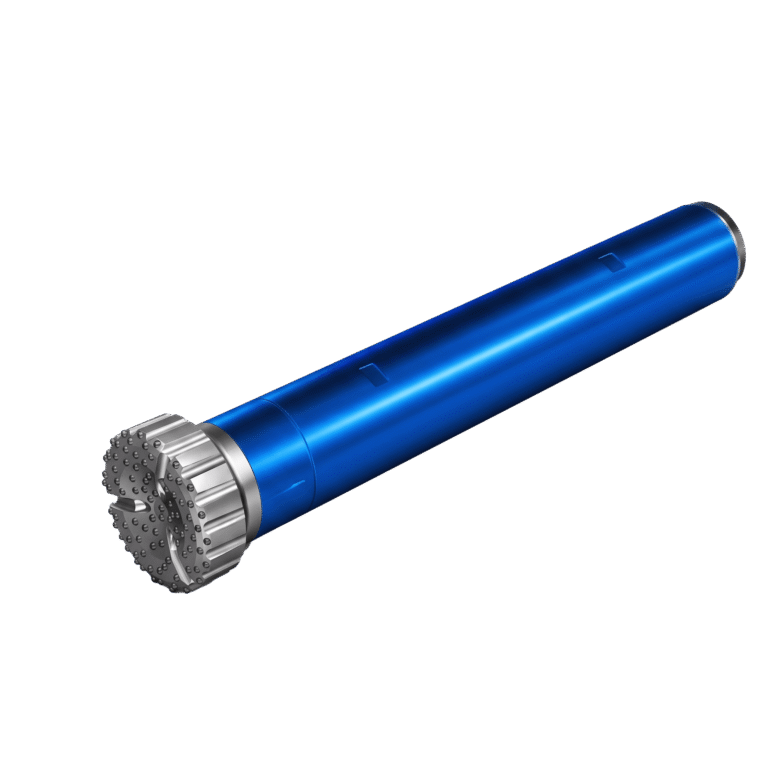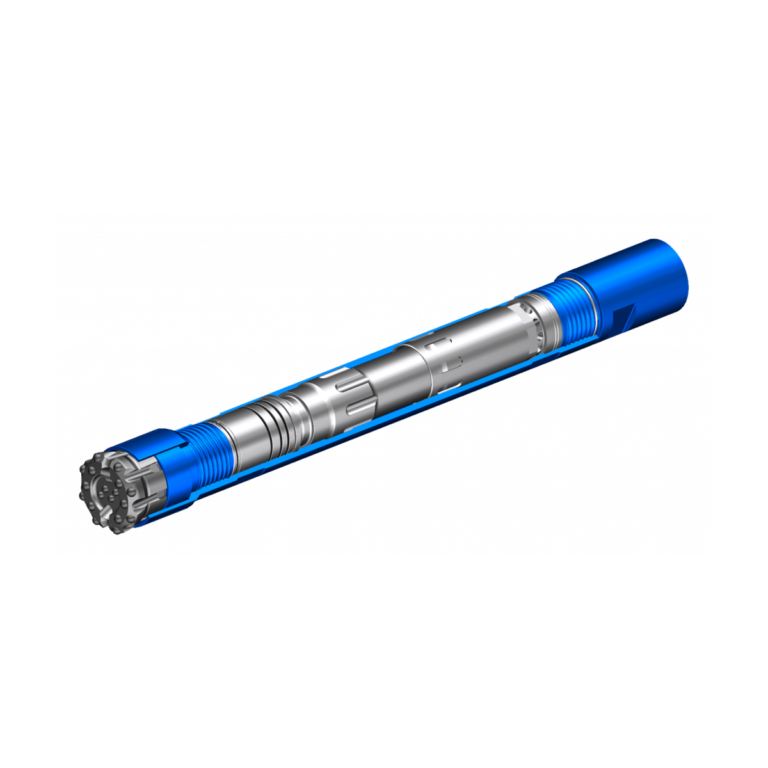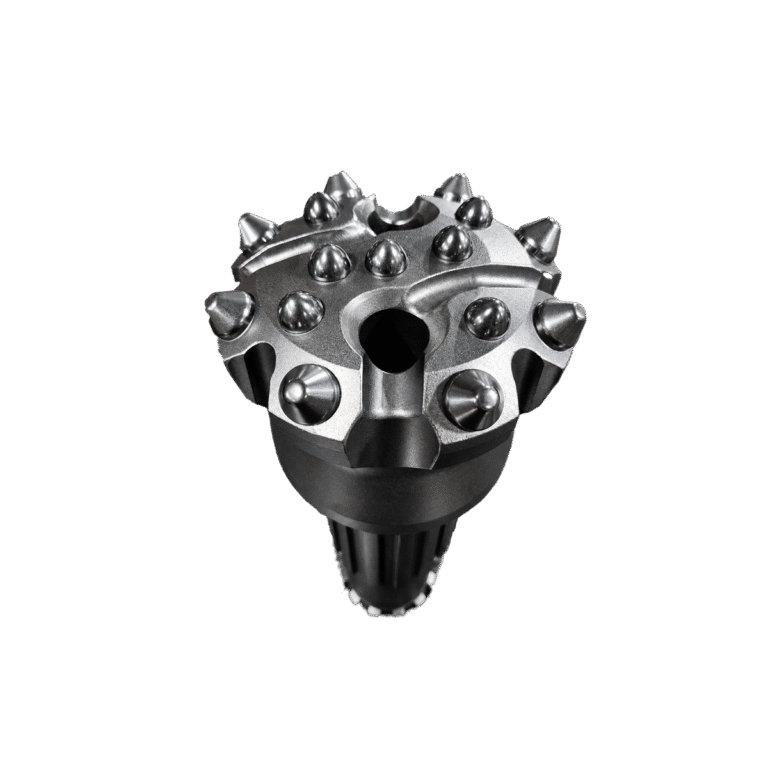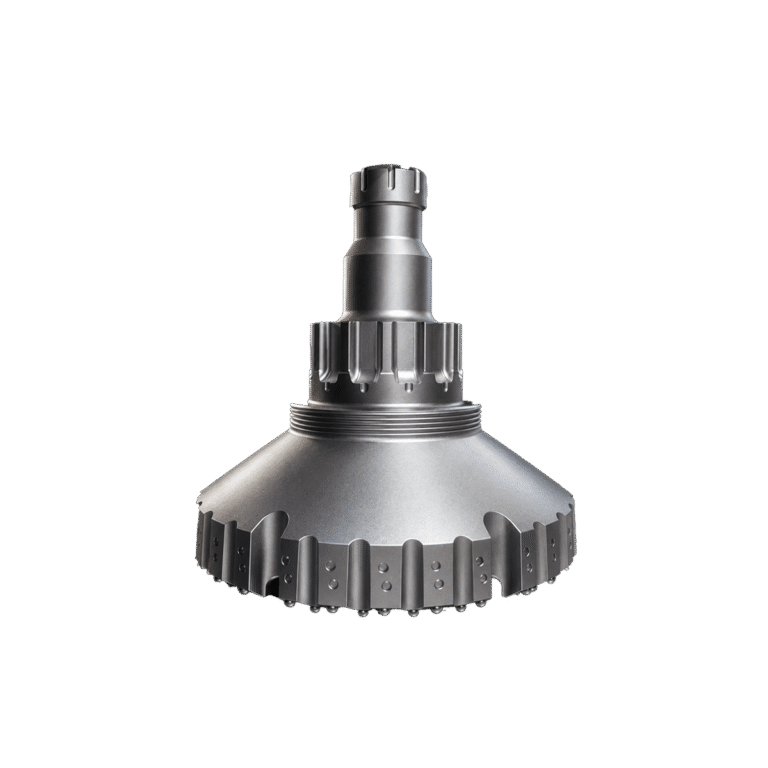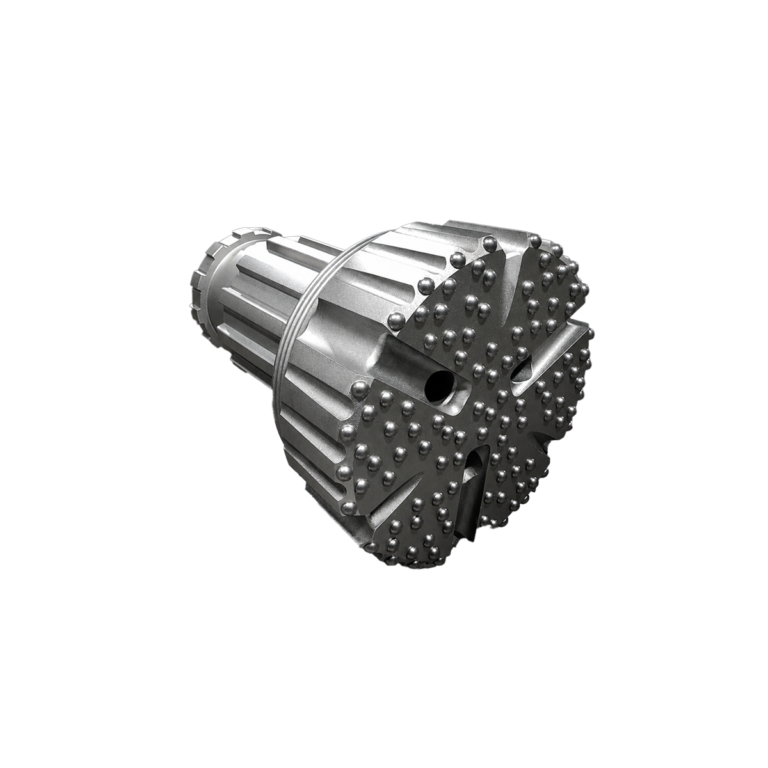
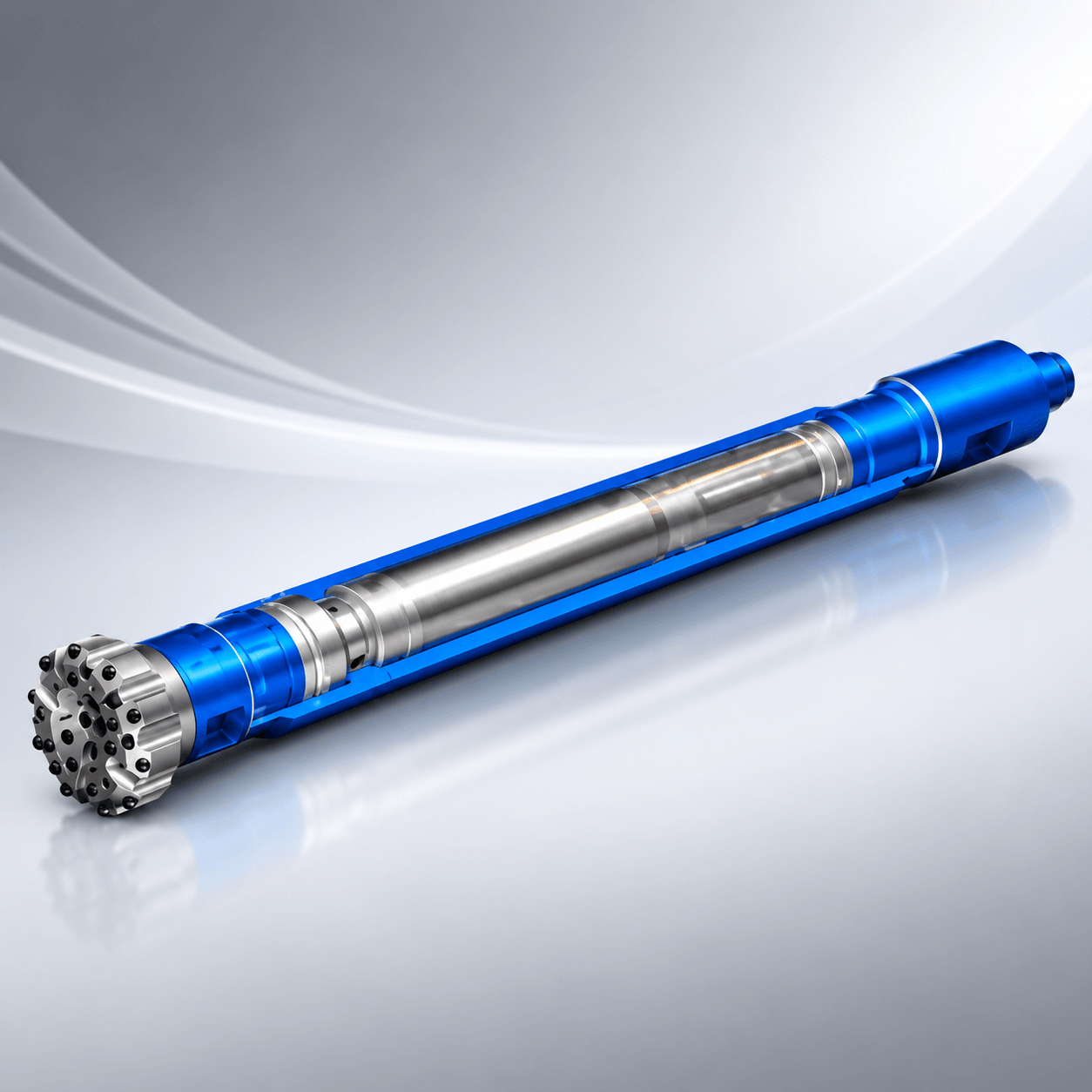
Not just another DTH hammer sized for water well — the WAI series is a genuinely fluid-driven hammer. Compressed fluid, not air, drives the piston and flushes the hole, delivering straighter holes, lower energy consumption, and cleaner drilling than a conventional air hammer.
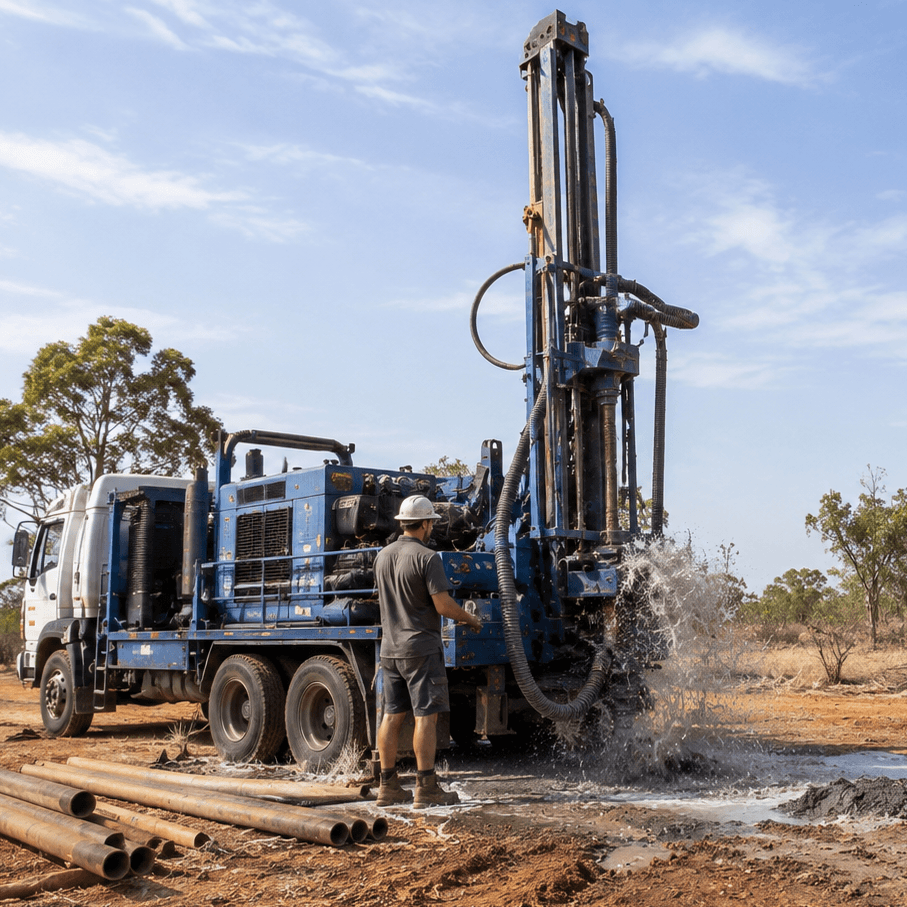
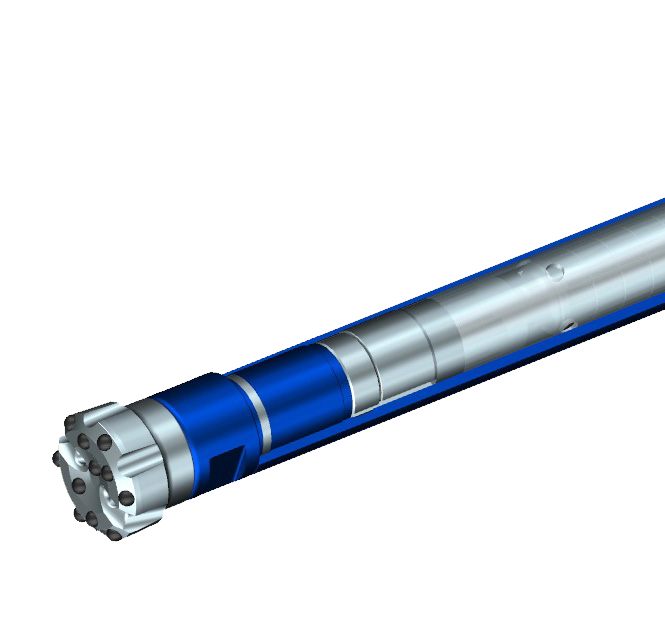
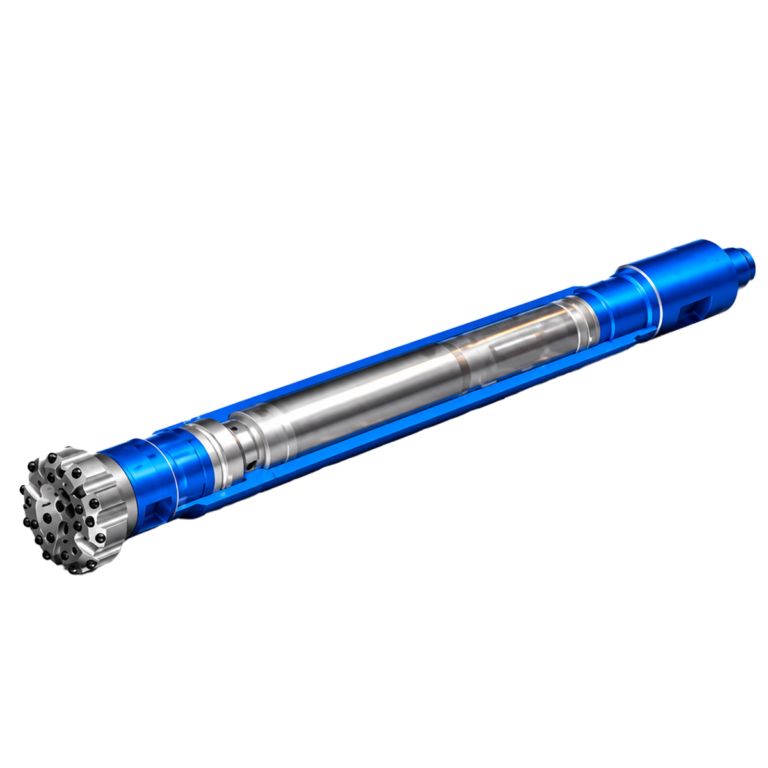
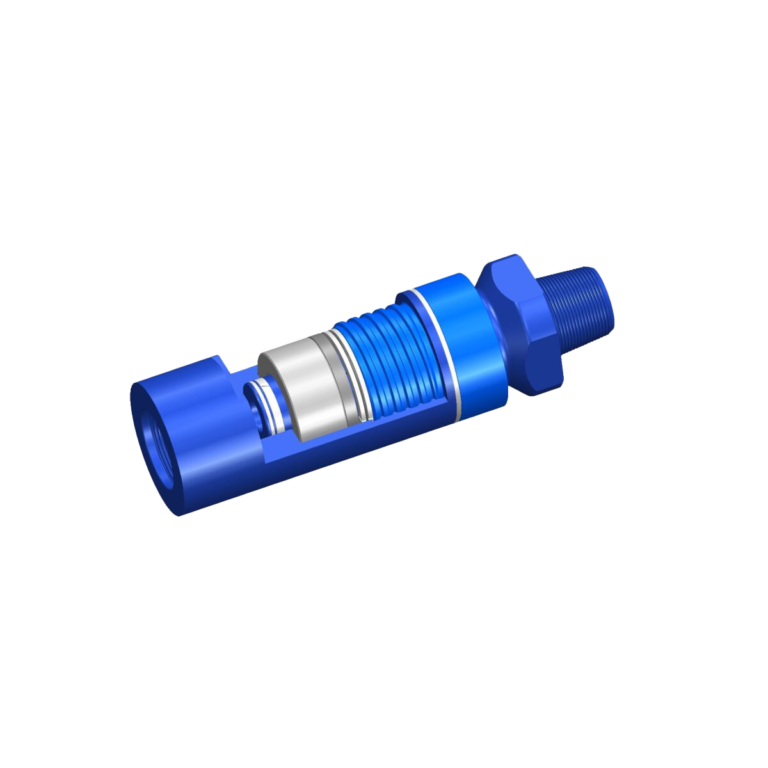
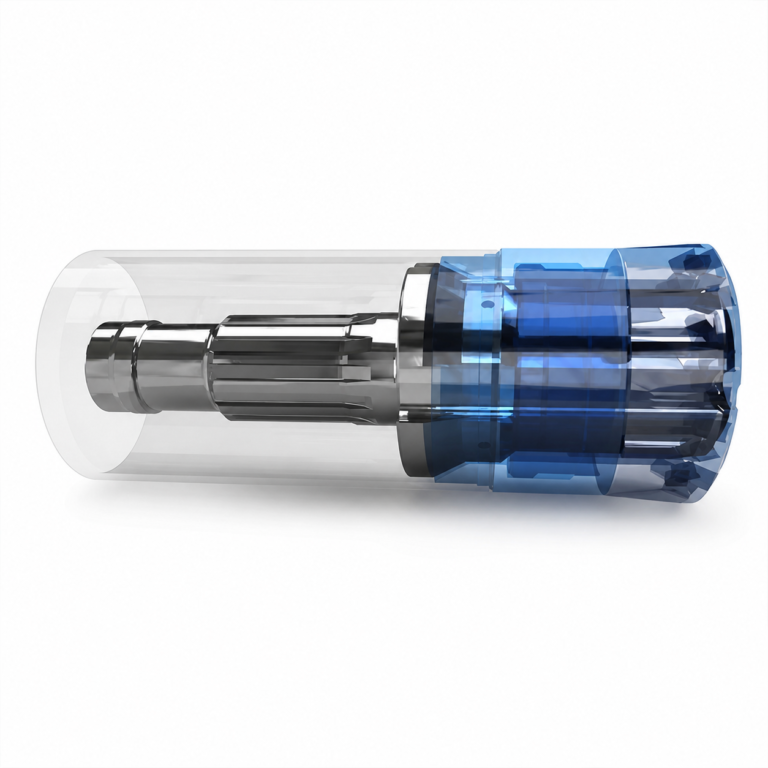
The WAI series hammer is designed to operate efficiently on fluid pressure. Compressed fluid is directed to the hammer via the rotation spindle and drill pipe. Exhaust fluid from the hammer passes through blow-holes in the drill bit and is used to flush the drilled hole. Rotation is provided by a rotation unit on the drill rig and transferred to the hammer via the drill pipe.
The drill pipe is threaded so the drill string can be extended as drilling advances and the hole becomes deeper. Feed force is transmitted to the hammer via the pullback/pull-down unit and the weight of the drill pipe — the same familiar rig setup drillers already know, just with fluid doing the work instead of air.
Understanding the fluid circuit is the key to understanding why this hammer behaves differently on site than an air hammer.
Before choosing a size, it's worth understanding why a fluid-driven hammer might be the right call for your project in the first place.
| Factor | WAI Water Hammer | Conventional Air Hammer |
|---|---|---|
| Drive Medium | Compressed fluid (closed exhaust loop) | Compressed air (vented to atmosphere) |
| Hole Straightness | Improved — will drill a straighter hole | Standard, more prone to deviation |
| Operating Cost | Lower — reduced energy consumption | Higher compressor energy demand |
| Environmental Profile | Cleaner — environmentally friendly drilling | Compressed air exhaust and noise at surface |
| Hole Stabilization | Optional integrated stabilizing ribs on wear sleeve | Varies by model |
Comparison reflects the general operating characteristics of fluid-driven vs. air-driven DTH hammers as described in Drill King's WAI product literature. Site-specific performance depends on formation, fluid supply, and rig configuration — talk to our technical team to confirm fit for your project.
Developed using a proprietary chemistry for the longest-lasting tools in the market.
Simple service ECO kits support self-service maintenance schedules in the field.
Delivers the fastest penetration rates in its class.
Customizable to optimize performance in either open hole or cased hole projects.<br />
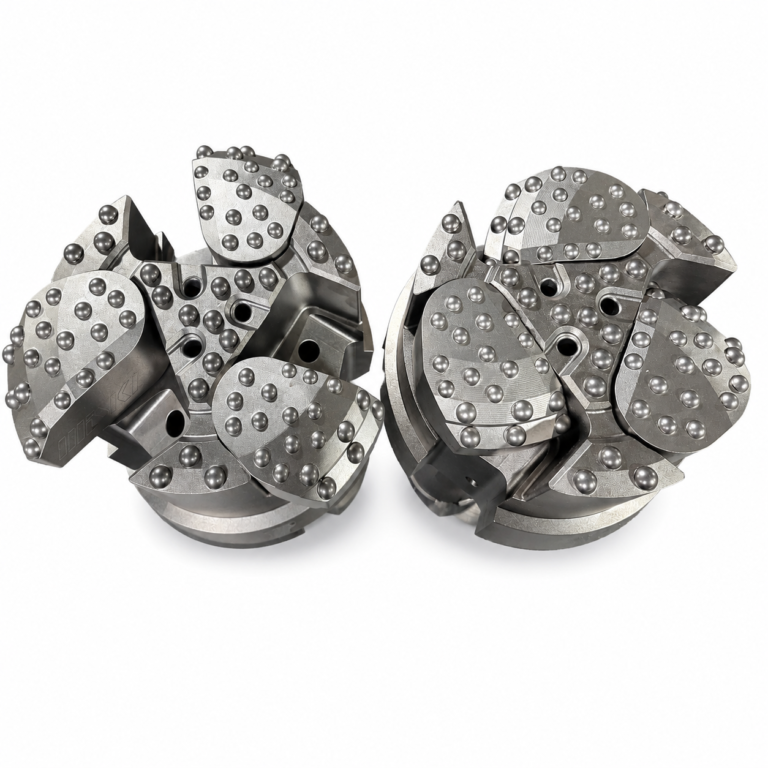
Button bit sizes from 3½" to 10½" (89mm–267mm) across the hammer lineup.
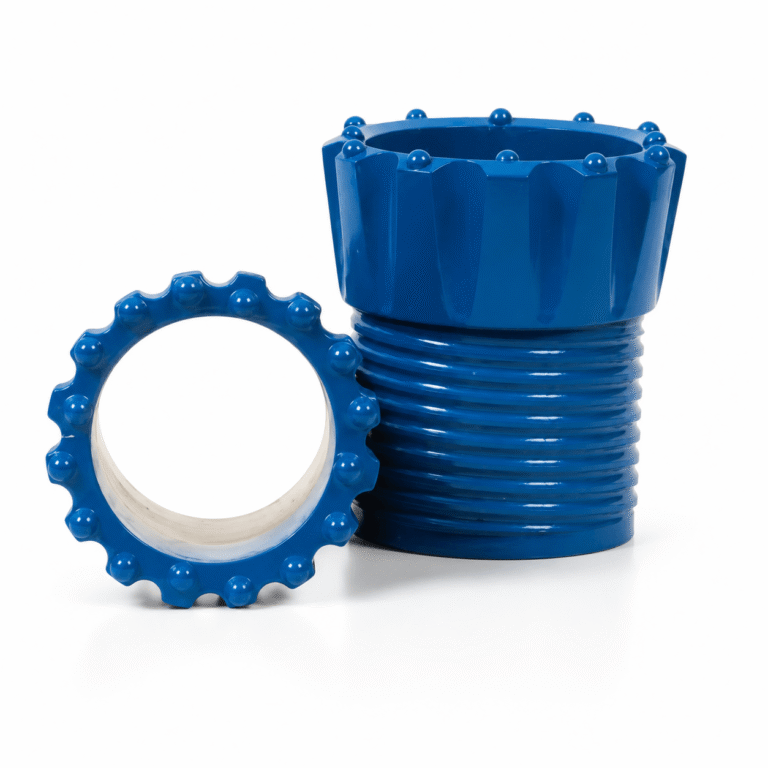
Available smooth, or with integrated stabilizing ribs to minimize hole deviation.<br />
Reduced energy consumption compared to conventional air hammer operation.
Will drill a straighter hole than a conventional air hammer.<br />
The core application for the WAI series — straighter holes and lower operating costs suit municipal, agricultural, and industrial water well construction.
Fluid-driven operation and hole-straightness benefits make the WAI series well suited to geothermal loop field and well installations.
Cleaner, more environmentally friendly drilling makes the WAI series a strong fit for urban or emission-sensitive project sites.
High-frequency drilling and premium alloy construction deliver the fastest penetration rates in hard, abrasive rock.
Customizable configurations suit both open hole and cased hole project requirements.
Optional integrated stabilizing ribs on the wear sleeve help minimize hole deviation where straightness is critical.
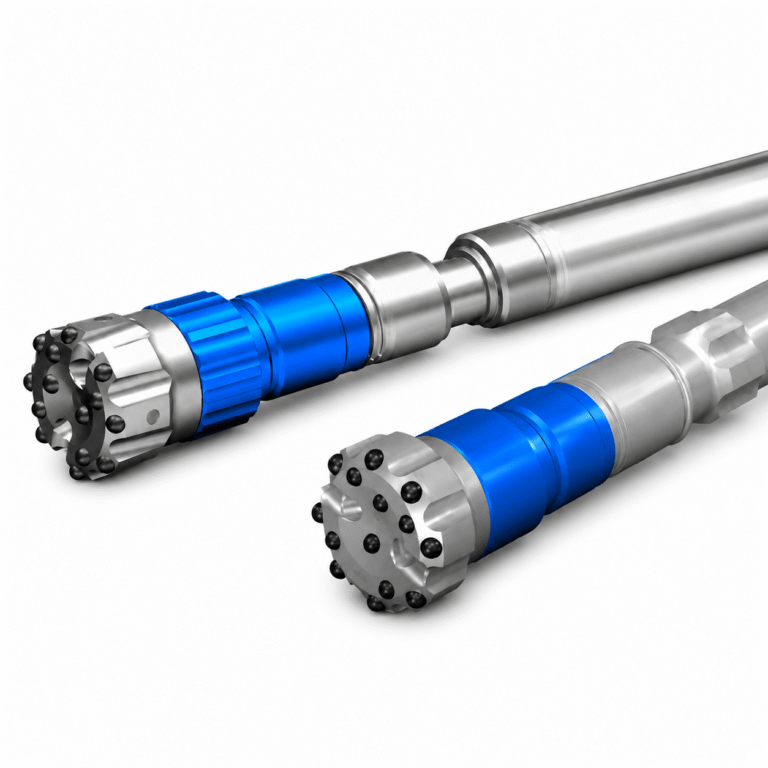
The WAI hammer series is matched with Drill King's DTH Button Bits across the full 3½"–10½" (89mm–267mm) range, engineered for the same fluid-flush path.
A water (fluid-driven) hammer uses compressed fluid, rather than compressed air, to drive the piston. Fluid is directed to the hammer through the rotation spindle and drill pipe, and the exhaust fluid — instead of venting to atmosphere like an air hammer — passes through blow-holes in the drill bit and flushes the hole. This closed-loop fluid path is what gives the WAI series straighter holes and lower energy consumption compared to a conventional air hammer.
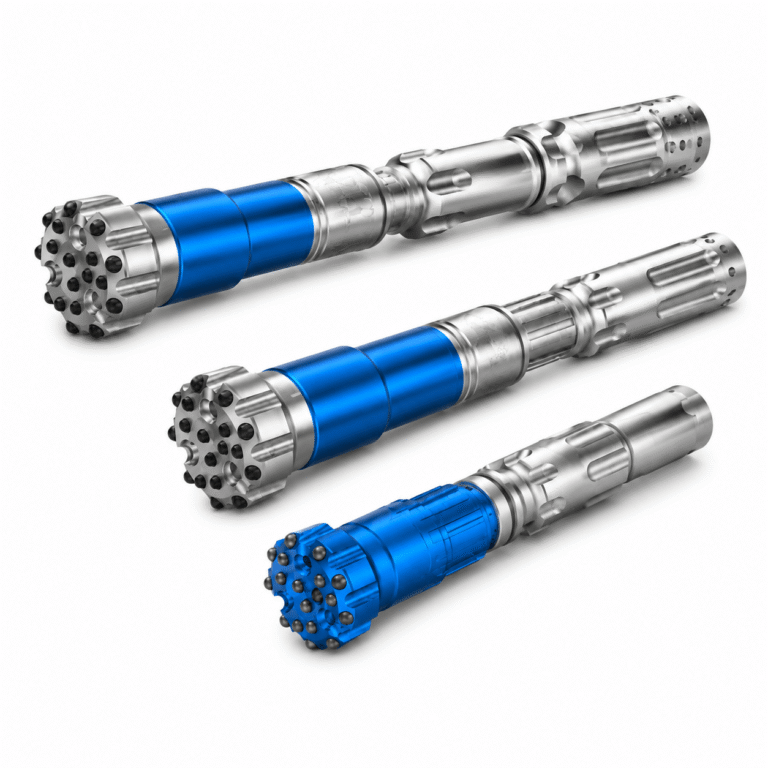
The WAI series spans five models across 3″ to 8″ hammer sizes — HADK-W30I, W40I, W50I, W60I, and W80I — paired with button bits from 3½” to 10½” (89mm to 267mm).
Fluid-driven hammers are worth considering when hole straightness is critical, when energy/operating cost matters over long programs, or when drilling in noise- or emission-sensitive environments where a cleaner, quieter fluid exhaust is preferable to venting compressed air.
Yes. The WAI series is customizable to optimize performance in both open hole and cased hole projects.
Yes. The wear sleeve is available in a smooth configuration or with integrated stabilizing ribs, which help minimize hole deviation during drilling.
Each WAI model is built on the same fluid-driven architecture, sized to match your target hole diameter. Download the individual technical brochure for detailed dimensions and performance data on each model.
Compact fluid-driven hammer for smaller-diameter water well and geotechnical programs.
Download ↓Mid-range fluid-driven hammer for general water well and construction drilling.
Download ↓Medium-diameter fluid-driven hammer for higher-output water well programs.
Download ↓Large-diameter fluid-driven hammer for demanding municipal and industrial water well work.
Download ↓The largest hammer in the WAI series, for high-volume, large-diameter fluid-driven drilling programs.
Download ↓Detailed per-model specifications (connection type, OD, weight, fluid consumption, torque) are provided in each model's technical brochure. This page will be updated with a full comparison table once current spec sheets are confirmed for the new site — contact Drill King for current technical documentation in the meantime.
Whether you're evaluating a water hammer for the first time or matching a model to your rig and formation, Drill King's technical team can help you find the right fit.