Technical Guide

Rock Drill Bit Sizes Explained: The Complete DTH Bit Size Guide (With Chart)

Drill Bit Sizing

DTH Bits

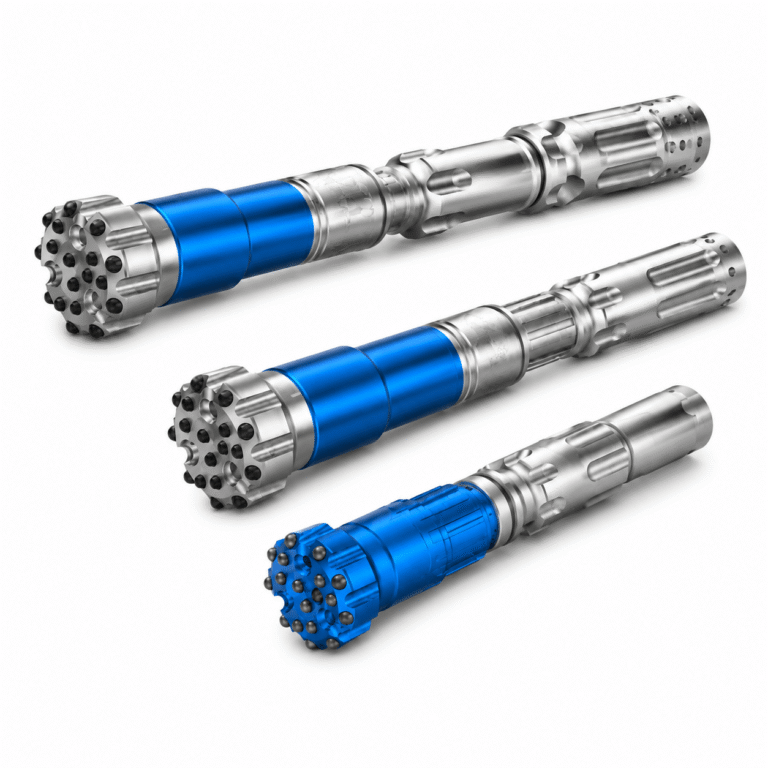
Rock drill bit sizes typically range from 2-3/4″ (70mm) to 42″ (1067mm) in diameter, with the correct size determined by three factors: your DTH hammer class, your required borehole diameter, and your application — whether that’s water well drilling, mining, construction, or quarrying. Choosing the wrong size doesn’t just slow the job down. An under-gauge bit produces holes too small for your casing program, while an oversized bit starves the hammer of energy, increases air consumption, and drives up your cost per foot.
At Drill King International, we manufacture DTH drill bits across one of the widest size ranges in the industry, and one of the most common questions our team answers is deceptively simple: “What size bit do I actually need?” This guide breaks down how rock drill bit sizing works, provides a practical DTH hammer-to-bit size chart, and walks through the right sizes for the most common drilling applications.
The Fundamentals

How Rock Drill Bit Sizes Are Measured
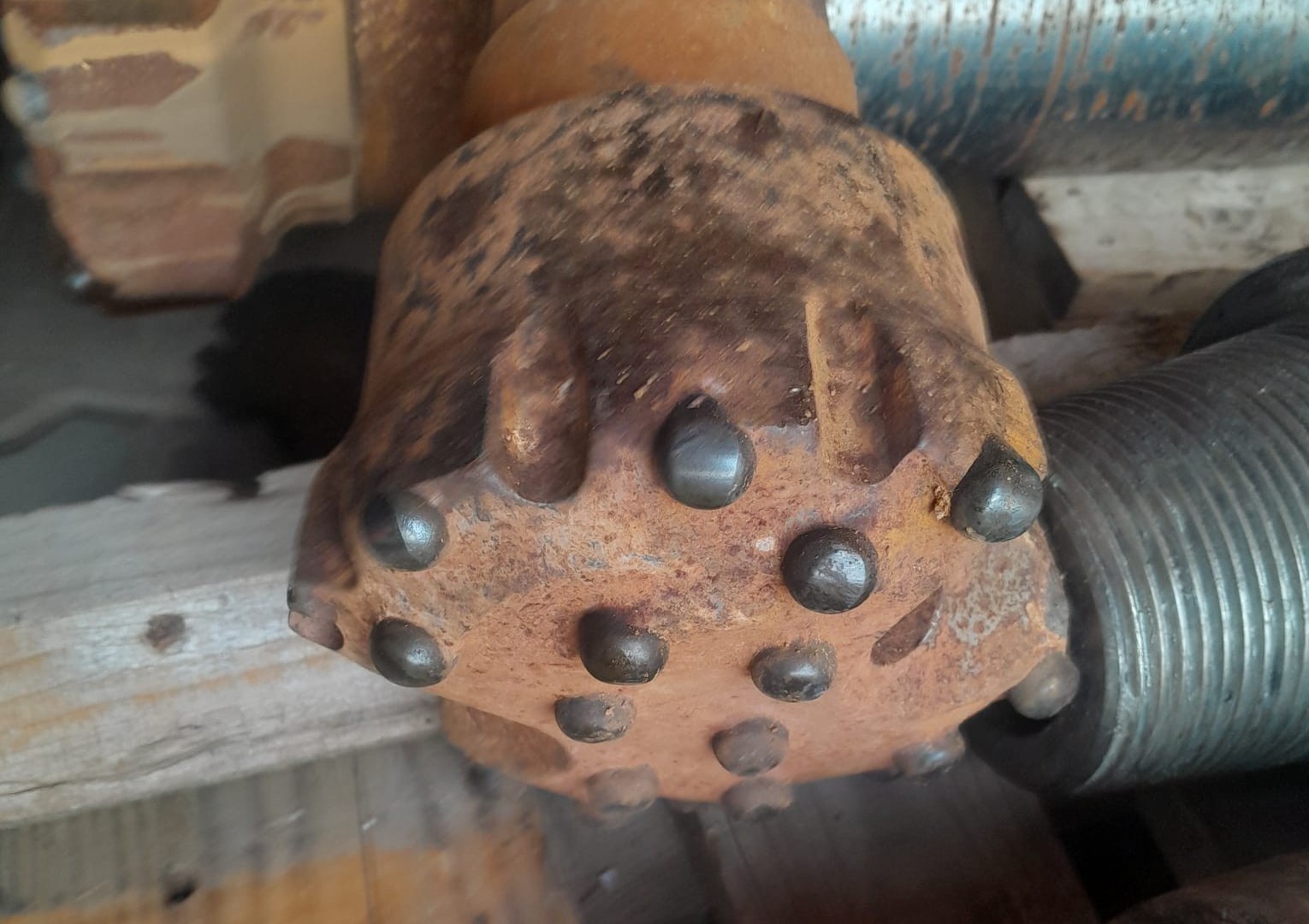
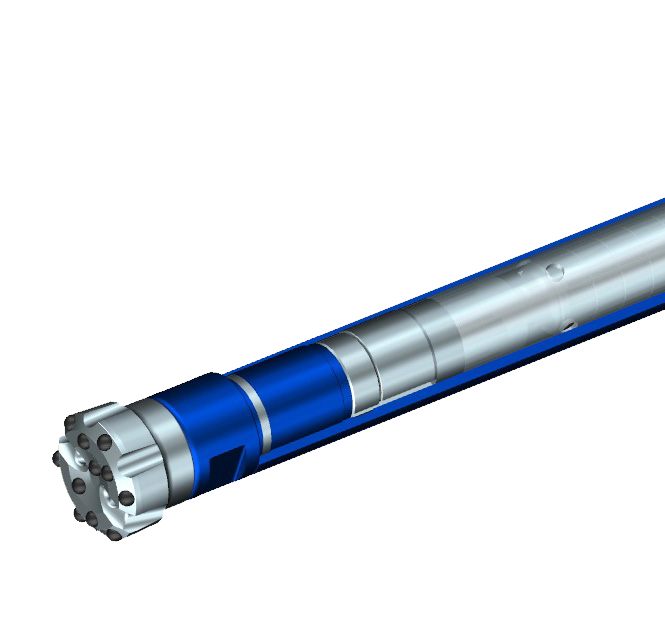
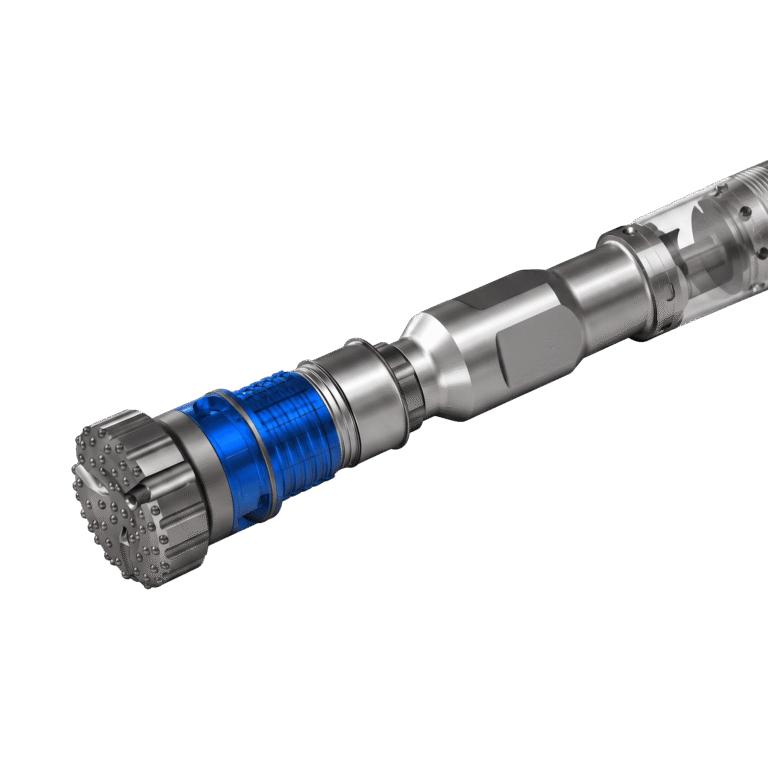
The gauge buttons — not the bit body — determine the effective drilling diameter

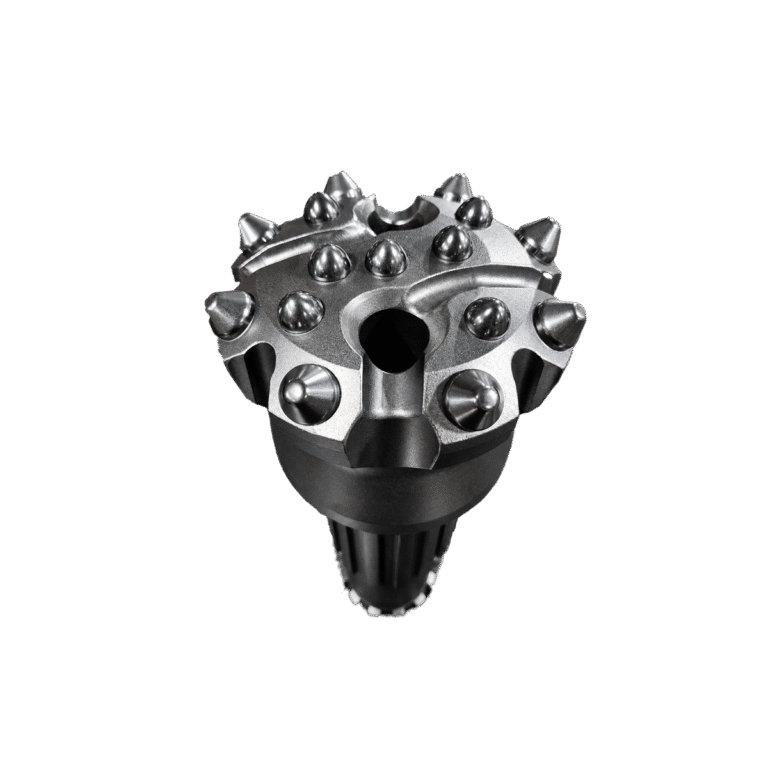
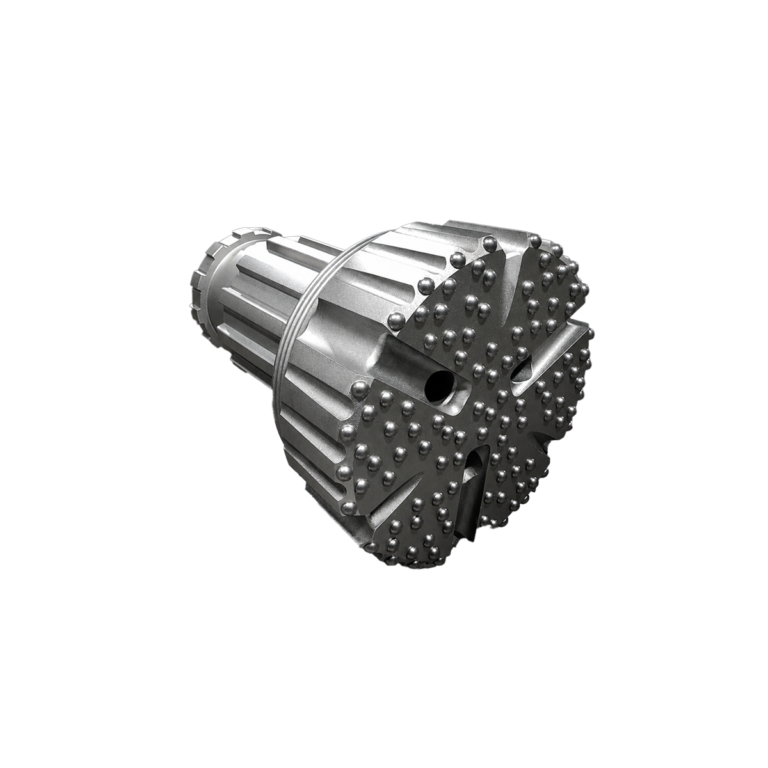
Rock drill bit size refers to the effective drilling diameter — the measurement across the gauge buttons that determines the final hole size, not the body of the bit itself. This is the number that matters when matching a bit to your casing, screen, or blast hole design.

Two measurement systems are used side by side in the drilling industry:

Imperial (inches) — standard across North America and much of the oilfield-adjacent drilling world. Bits are specified as 3-1/2″, 4″, 6″, 8″, and so on.

Metric (millimeters) — standard in Europe, Asia, Australia, and most international tenders. Common examples include 90mm, 115mm, 152mm, and 203mm.

Where Confusion Creeps In

DTH hammers are almost always referred to in inches (a “4-inch hammer” or “6-inch hammer“), even on projects where the bit diameter is specified in millimeters. A 6″ DTH hammer doesn’t drill a 6” hole — it drills a range of hole sizes depending on the bit fitted to it. Getting comfortable converting between the two systems prevents costly specification and procurement errors, especially on international projects.
Two Different Numbers

Bit Diameter vs. Shank Size

The bit diameter determines the size of the hole you drill; the shank determines whether the bit physically fits your hammer. These are separate specifications, and both must be correct.

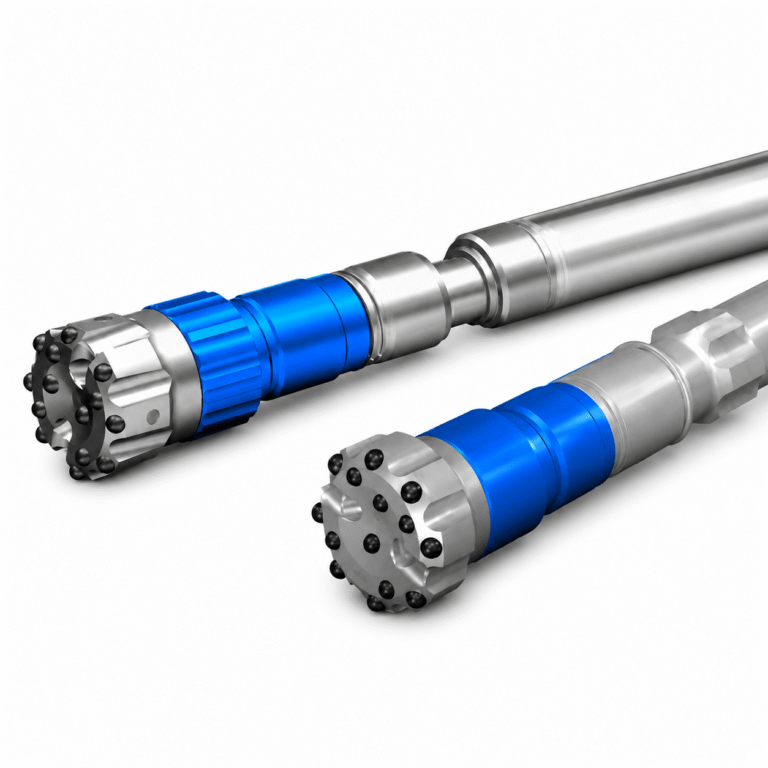
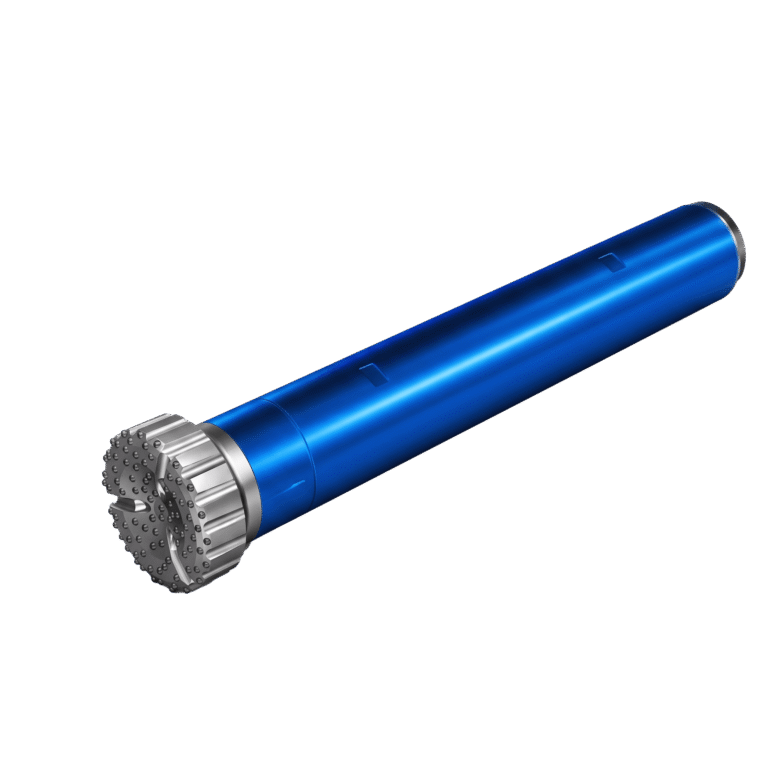
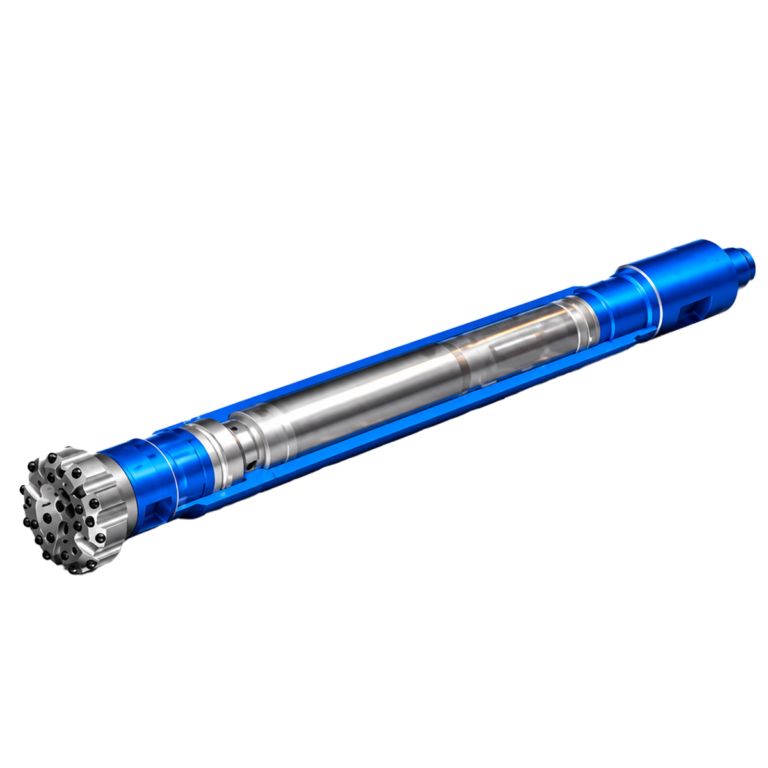
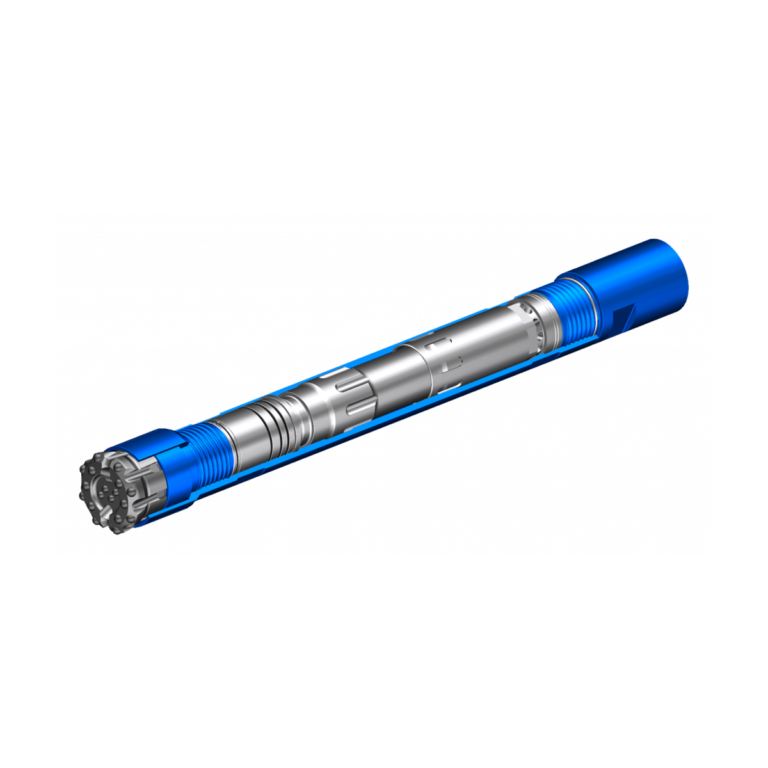
The shank is the splined rear connection that transfers percussive energy from the DTH hammer’s piston into the bit. Each hammer class uses a defined shank profile, and industry-standard shank series — such as DHD, QL, SD, Mission, and COP — are not interchangeable. A 4″ bit with a DHD340 shank will not fit a hammer built for a QL40 shank, even though both are “4-inch” tools.

Before You Order

Always confirm two things: the bit diameter your hole design requires, and the exact shank series of the hammer it will run on. If you’re unsure which shank your hammer uses, our technical team can identify it from the hammer model — it’s a two-minute conversation that avoids an expensive mismatch.

Reference Chart

DTH Bit Size Chart: Hammer Class to Bit Diameter

The chart below shows the typical bit diameter range for each standard DTH hammer class. Use it as a first-pass reference — the exact working range varies slightly by hammer model and shank series.
DTH Hammer ClassTypical Bit Diameter (in)Typical Bit Diameter (mm)Common Applications
2″ – 2.5″2-3/4″ – 3-1/2″70 – 90mmMicro-piling, anchors, tight-access geotechnical work
3″3-1/2″ – 4″85 – 105mmBlast holes, anchors, small water bores
3.5″3-3/4″ – 4-1/2″95 – 115mmQuarry blast holes, geotechnical investigation
4″4-1/4″ – 5″110 – 130mmBlast hole drilling, water wells, geothermal loops
5″5-1/4″ – 6-1/2″134 – 165mmMining production holes, water wells
6″6-1/4″ – 8″156 – 203mmWater wells, geothermal, construction piling
8″8-1/2″ – 10″216 – 254mmLarge water wells, foundation drilling
10″10-5/8″ – 12-1/4″270 – 311mmDeep water wells, large-diameter foundations
12″ +12-1/4″ – 42″311 – 1067mmLarge-diameter piling, caissons, shaft drilling (often with hole openers)

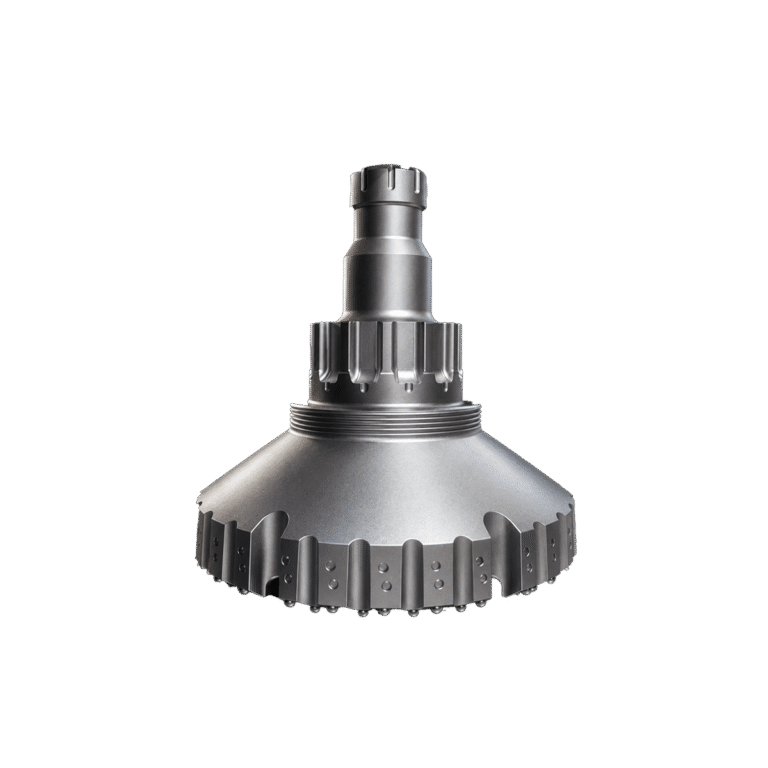
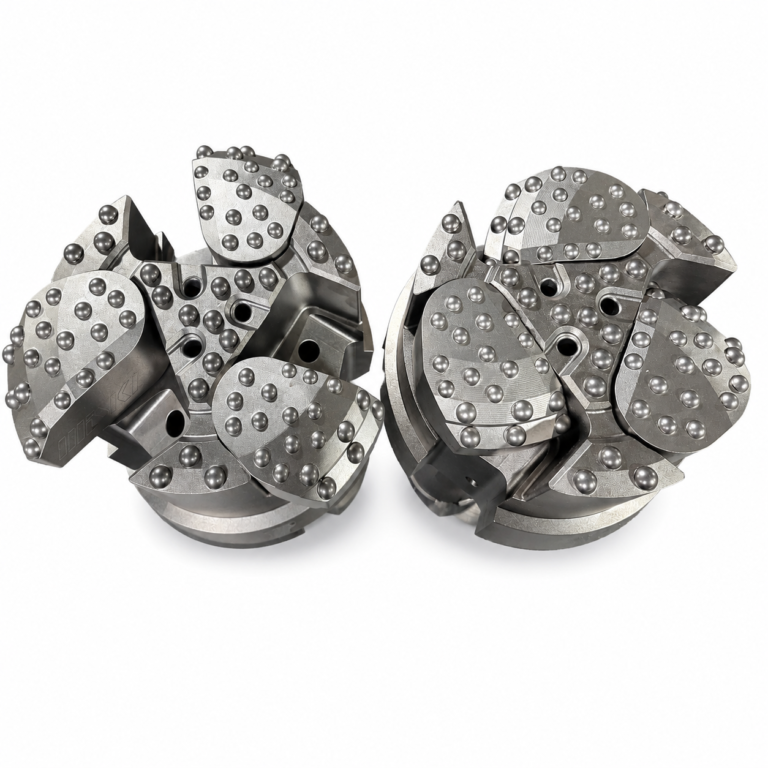
Two practical notes on reading this chart. First, every hammer performs best in the lower-to-middle portion of its bit range — running the largest possible bit on a hammer works, but penetration rates drop because the same impact energy is spread across a larger face. Second, for holes beyond roughly 12″ – 15″, the standard approach shifts from a single large bit to a pilot bit followed by a DTH hole opener, which enlarges the pilot hole in stages. Drill King manufactures hole openers from 6″ up to 36″ diameters for exactly this kind of staged enlargement.

By Application

Choosing the Right Bit Size by Application
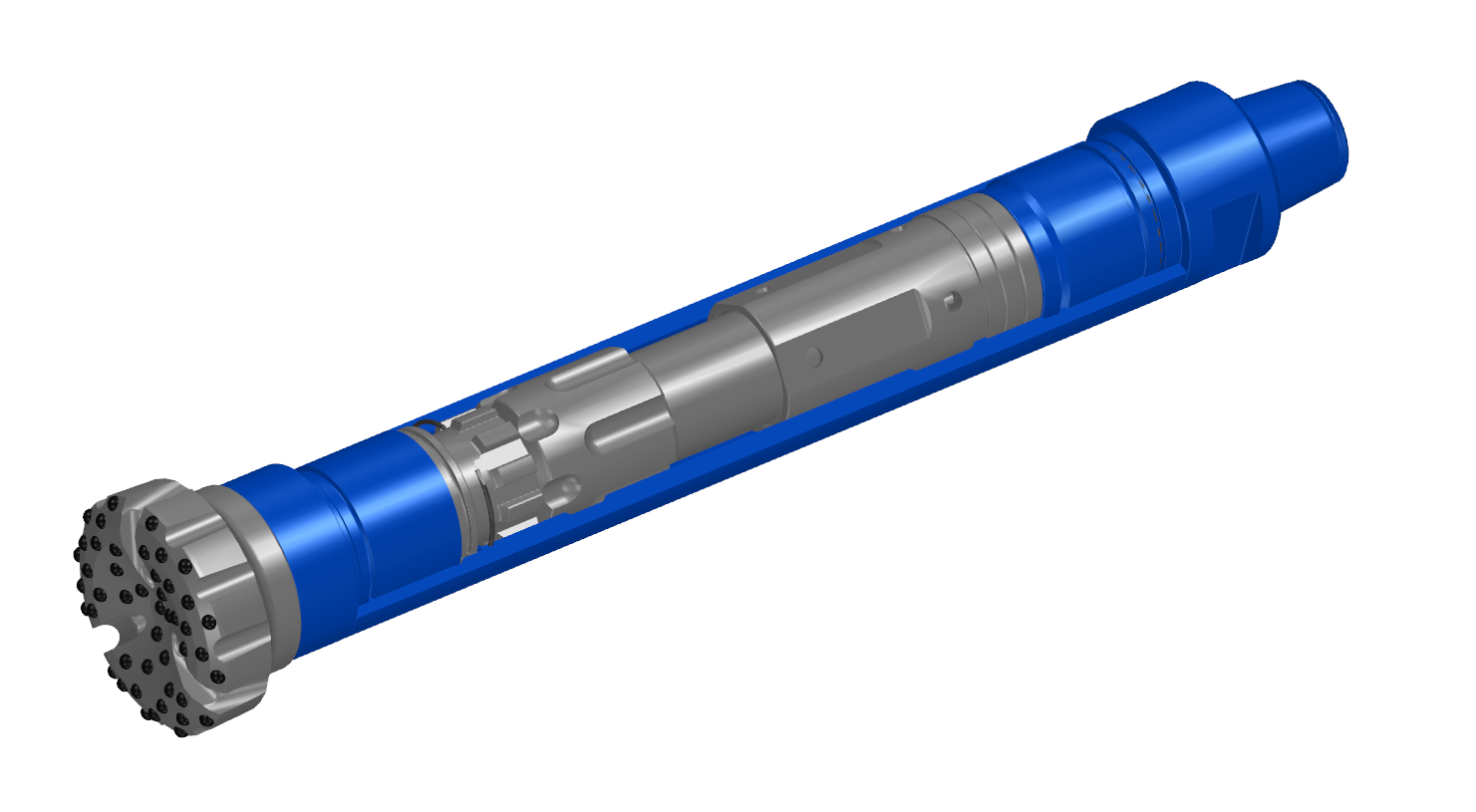
The correct bit size is driven by engineering requirements — casing programs, yield targets, blast designs — not by preference. Here’s how sizing typically breaks down across the major drilling sectors.

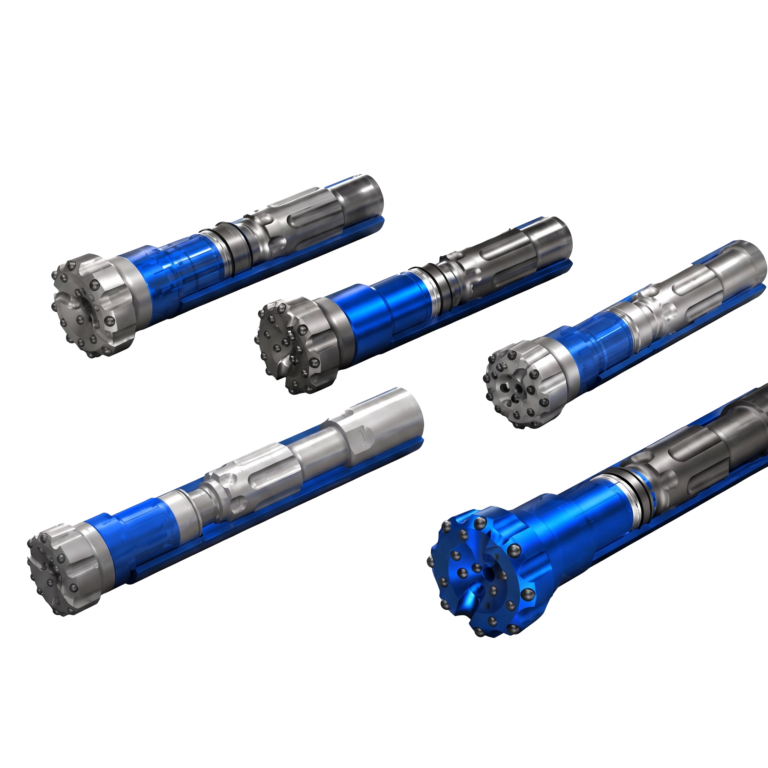
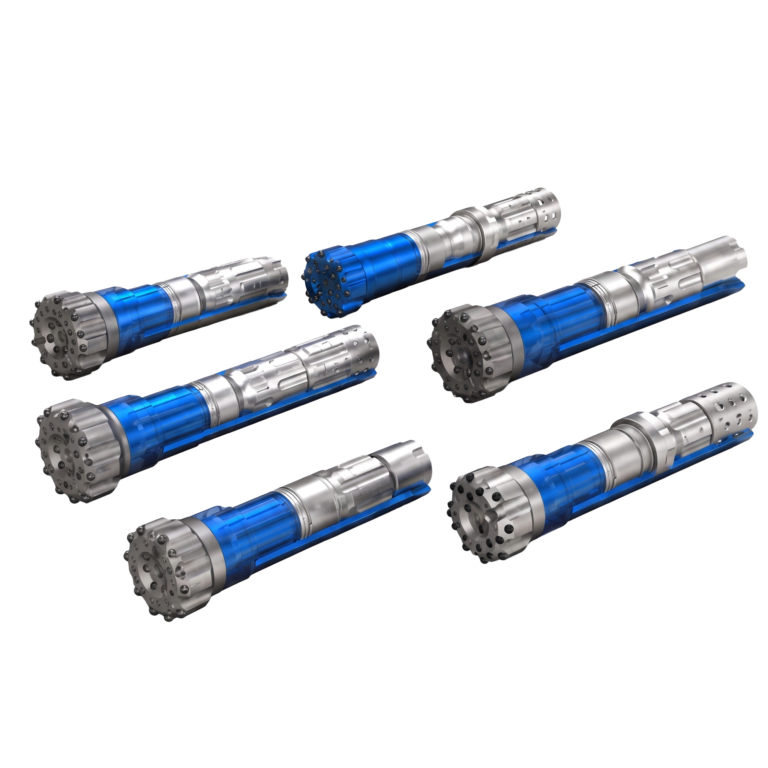
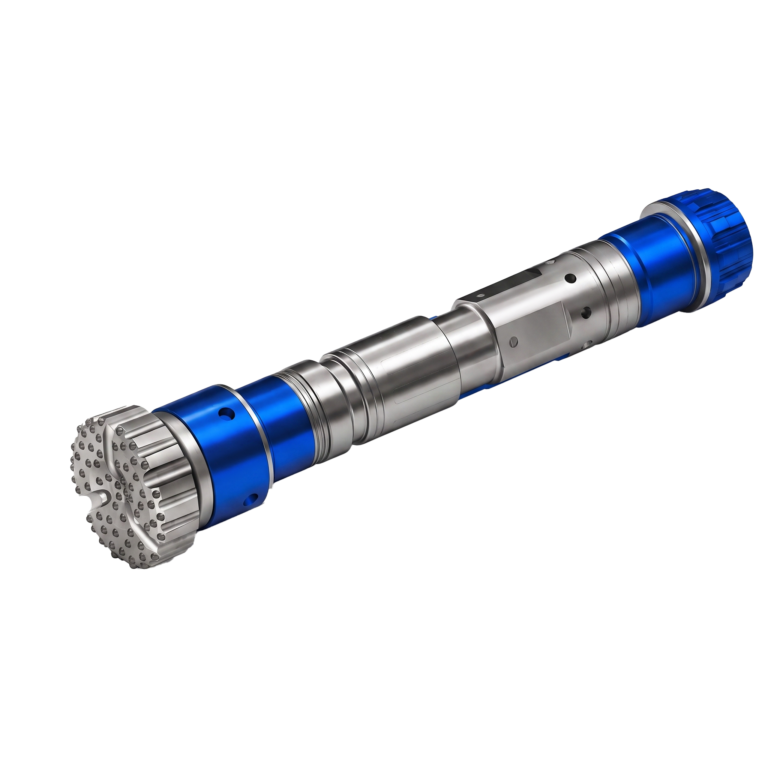
Matching bit diameter and shank series to the hammer assembly is application-specific

01

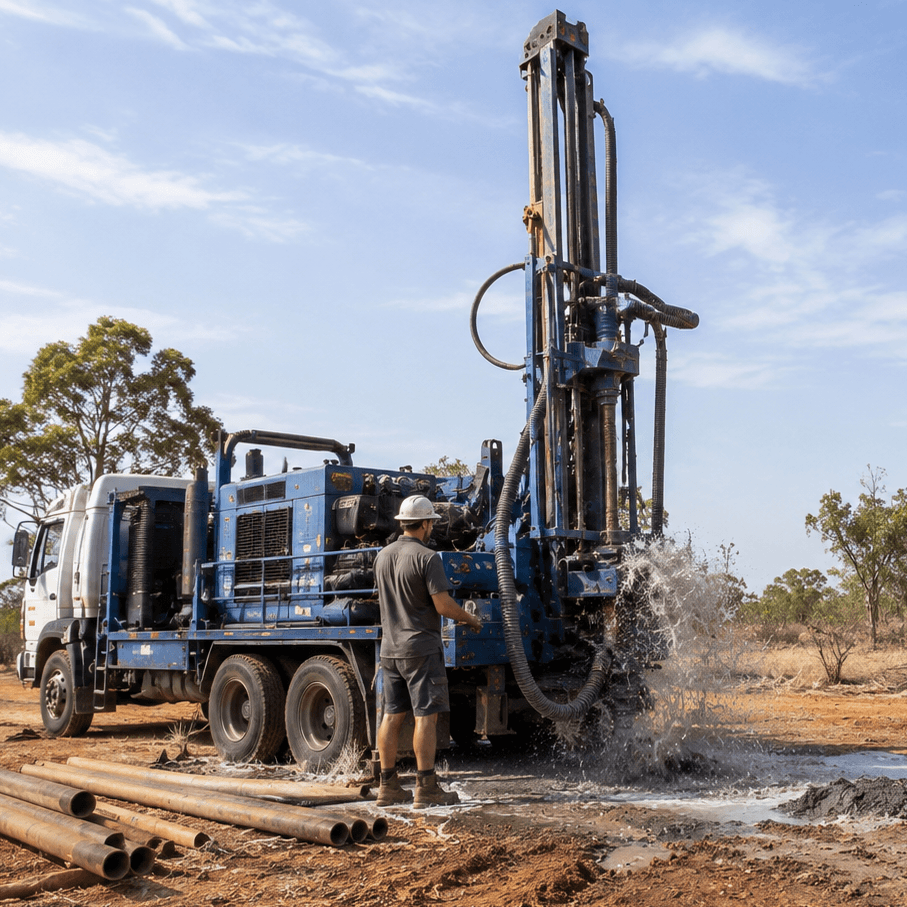
Most residential and agricultural water wells are drilled with bits in the 6″ – 10″ (152 – 254mm) range. The governing factor is the casing and screen diameter needed to achieve the target yield: the borehole must be large enough to accommodate the casing plus an annular space for gravel pack and grouting. A common configuration is a 6-1/4″ or 6-1/2″ bit for 4″ – 5″ casing, stepping up to 8″ – 10″ bits where 6″ casing or higher-yield screens are specified. Municipal and irrigation wells frequently push into the 10″ – 12″+ range. If you’re sizing a bit for a cased well, work backwards from the casing outside diameter and add the annular clearance your completion design requires.

02

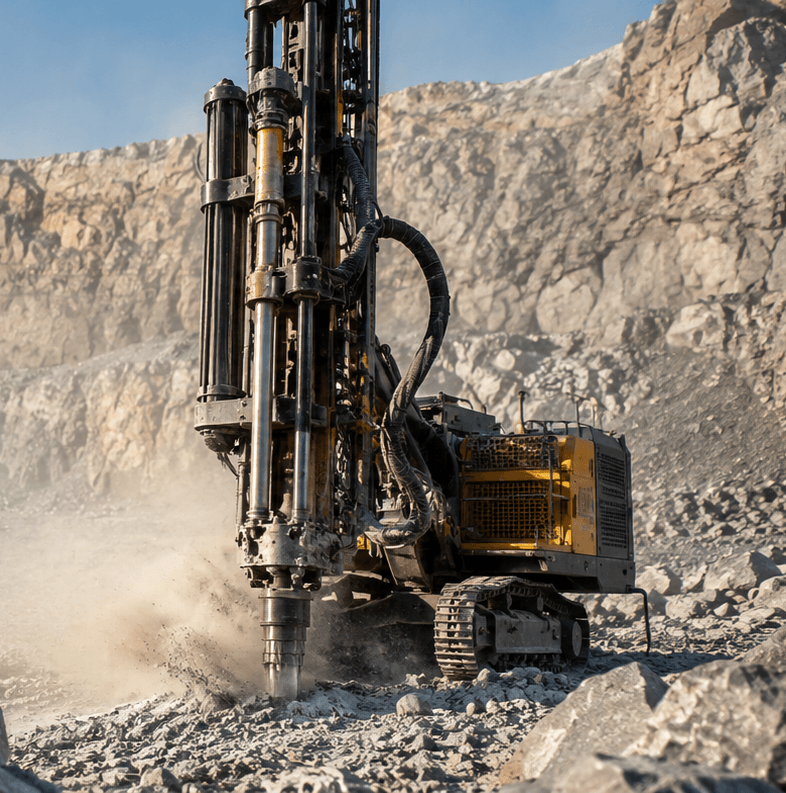
Bench blast holes in mining and quarrying most commonly use bits between 3-1/2″ and 7″ (90 – 178mm). Hole diameter here is dictated by the blast design — burden, spacing, and explosive charge calculations all key off the hole size — as well as bench height and rig capability. Smaller quarry operations typically run 3-1/2″ – 4-1/2″ bits on 3″ – 4″ hammers, while larger open-pit production drilling moves up to 5″ – 7″ holes.

03

Construction drilling spans the widest size spectrum of any sector. Geotechnical investigation and micro-piling work sits at the small end, often 2-3/4″ – 4″ bits, while rock-socketed piles, caissons, and foundation shafts can require anything from 12″ to 42″ diameters, achieved with large-diameter bits, hole openers, or casing advance systems. Where unstable overburden must be supported during drilling, casing advancement systems drill and case simultaneously — with the casing size selected first and the pilot bit and ring bit sized to match.

04

Closed-loop geothermal boreholes are typically drilled at 4-1/2″ – 6″ (115 – 152mm), balancing enough diameter for the loop pipe and grout against the cost per foot of drilling. Deeper commercial geothermal wells follow sizing logic closer to water well practice, stepping down in diameter through cased sections.

Working Together

What About Casing Sizes?

Casing size and bit size are designed together, not separately. In any cased hole — water wells, foundation work, unstable overburden — the drill bit must produce a hole with sufficient clearance over the casing’s outside diameter, typically at least 1″ – 2″ of total annular space depending on depth and grouting requirements.
In casing advance drilling, this relationship is built into the system: the pilot bit and ring bit are engineered to cut a hole precisely sized for the casing being simultaneously installed. If your project specifies casing first (as most do), your bit size is effectively decided for you — which is why we always recommend confirming the full casing program before ordering bits.
Before You Order

Getting the Size Right: A Quick Checklist

Before you order your next rock drill bit, run through these five checks:

1

Confirm the required hole diameter from the casing program, blast design, or engineering specification.

2

Match the bit to your hammer class — the bit diameter should sit comfortably within the hammer’s working range, ideally not at its maximum.

3

Verify the shank series (DHD, QL, SD, Mission, COP, etc.) against your hammer model.

4

Check mm/inch conversions twice on international specifications.

5

Consider the formation — face design and button configuration should match the rock, but only after diameter and shank are locked in.
Get the Right Size Bit for Your Next Project
Selecting the correct rock drill bit size comes down to matching three things: the hole your project requires, the hammer you’re running, and the shank that connects them. Drill King International manufactures DTH drill bits from 2-3/4″ (70mm) to 42″ (1067mm), with popular sizes held in stock for fast delivery and full customisation available for specialised requirements.
Common Questions

Frequently Asked Questions

What sizes do rock drill bits come in?
Rock drill bits for DTH drilling range from around 2-3/4″ (70mm) up to 42″ (1067mm) in diameter. The most commonly used sizes fall between 3-1/2″ and 10″, covering the bulk of blast hole, water well, geothermal, and construction drilling. Diameters above roughly 15″ are usually achieved with DTH hole openers enlarging a pilot hole rather than a single bit.
Most water wells use bits between 6″ and 10″ (152 – 254mm), sized to fit the casing and screen diameter plus annular clearance for gravel pack and grout. A typical residential well running 4″ – 5″ casing is drilled with a 6-1/4″ – 6-1/2″ bit, while wells with 6″ casing or larger generally require 8″ – 10″ bits.
Not exactly — the hammer class describes the tool, not the hole. A 6″ DTH hammer typically runs bits from about 6-1/4″ up to 8″, so the actual hole diameter depends on the bit fitted. Always specify the bit diameter you need for the hole, then confirm it falls within your hammer’s working range.
The shank must match your DTH hammer’s series — common standards include DHD, QL, SD, Mission, and COP profiles, and they are not interchangeable. Your hammer’s model designation identifies its shank; if it’s unclear, a bit supplier can confirm it from the hammer make and model before you order.
Both systems are in active use. Inches dominate in North America, while millimeters are standard across Europe, Asia, and Australia. DTH hammers are almost universally described in inches even on metric projects, so double-checking conversions between the two systems is essential to avoid ordering errors.
Speak to a Bit Sizing Specialist
If you’re unsure which size or shank configuration suits your rig and application, our technical team is ready to help you specify it correctly the first time.

Drill King is proud to be ISO 9001:2015 certified as of September 2017 — giving further credibility to our commitment to world-class quality and continual improvement in every product we manufacture.

Table of Contents

Get the "diameter and shank right, and every foot of drilling that follows is set up for maximum penetration and minimum cost."

Not Sure Which Bit Size You Need?

Our technical team can confirm the right bit diameter and shank series for your hammer, casing program, and application.

Free Resource

Driller Cheat Sheets

Download DKI’s quick-reference cheat sheets covering bit sizing, shank compatibility, and hammer-to-bit charts for the full DKI range.

Related Articles

Urban Geotechnical DTH Drilling

The Introduction In modern construction and infrastructure development, understanding subsurface conditions is essential for safe and durable engineering design. One of the most effective methods for achieving this is with

Read More »

Product Inquiry

Request a Quote

Great! We’ve received your information.

Construction

Built tough enough for the unpredictability of job sites, our equipment minimizes costly downtime and re-drills.

Exploration

Every hole counts, and our tools are built to keep penetration rates high even in unpredictable, mixed formations.

Mining

Engineered for open-pit and underground alike, our tools lower per-meter drilling costs without sacrificing performance.

Oil & Gas

Engineered for the rigors of well-site conditions, our hammers and bits extend service life while reducing per-foot drilling costs.

Quarrying

Less downtime, fewer bit changes, more material moved. That's the Drill King difference for quarry operators who can't afford to slow down.

Water Well & Geothermal

From residential wells to large-scale geothermal fields, our tools are trusted to get the job done right the first time